




Introduction:
Proper storage of board games can keep your collection safe from damage, dust and disarray for years to come. Gamers will often pile boxes up in random order, only to find the lids dented, the art faded, or parts missing. These challenges can be avoided by adopting a defined strategy How to Store Board Games Long Term combining a vertical orientation, climate control and clever organization. This article tells you exactly how to keep board games for the long-term so that every title remains playable and attractive. It doesn’t matter if you have ten games or 200. Begin with the correct setting, select strong shelves or containers, and establish consistent routines. The result is a collection that looks nice and lasts much longer.
Why you need good storage for your board games
Bad storage does bad things to board games. Cardboard is prone to water, and will deform under pressure. artwork on lids and rulebooks will fade in sunlight Dust gathers on open boxes and sticks to cards. Stacking heavier games on top of light ones destroys components over time. That means players squander money on buying new copies of damaged titles. Proper storage prevents this and maintains high resale value. Plus, an organized collection makes game nites faster as you locate what you need right away. Also, proper approaches eliminate mess in living places. So learning how to store board games properly will save money and frustration, not to mention your investment.
First, Choose the Right Environment
The key to successfully storing board games is to maintain the temperature and humidity. To avoid the cardboard bloating or becoming brittle, keep the relative humidity between 40 and 50 percent. Avoid attics, basements and garages. These locations encounter wide temperature changes. Instead, keep your collection in a climate-controlled chamber inside the main living room. Direct sunshine fades colours fast, so keep shelving away from windows. Good air circulation will also help to stop musty aromas forming in the boxes. Keep an eye on conditions with a simple hygrometer. A steady environment will make all other storage decisions easier and more effective to make.
Vertical Storage vs Horizontal Stacking
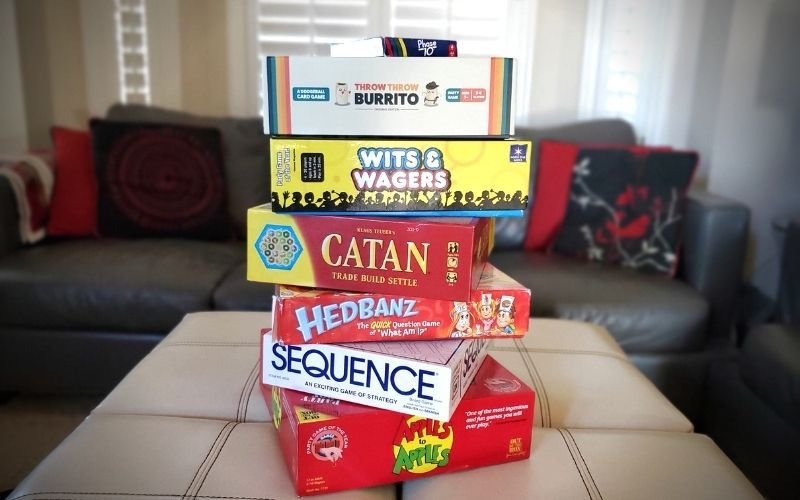
Keeping board games standing up on shelves is preferable to flat stacking to prevent lids. It also distributes the weight evenly and prevents boxes underneath from becoming crushed. Opt for solid bookcases or dedicated game shelves with customizable heights. Leave a little space between games so that air can flow and boxes can slip out easily. If the boxes are tall you might want to place them on the lower shelf to keep the centre of gravity low. You may even sort games by size/weight such that the heavier titles are at the bottom. Plus this method displays cover art nicely and is more fun to select. Most collectors say vertical storage takes care of most warping problems.
Most options are best served by vertical shelving, which balances protection, visibility and accessibility. Clear bins are the least expensive and work well in confined places, but they hide the art that makes browsing fun. Custom cabinets offer the best in safety and beauty, but are a hefty expenditure. Also, under-bed storage utilizes the unused space, although it’s less convenient to retrieve games. Horizontal stacking is still the cheapest, but ruins boxes the fastest. Wall mounted racks are a great way to free up floor space for modest collections. Most collectors, therefore, obtain the best long-term results by combining vertical shelves as the principal approach with bins for overflow or seasonal games.
Keep Boxes Free of Dust and Light
Board game pieces are slowly degraded by dust and ultraviolet radiation. Store games on closed back shelves or in cabinets that restrict airborne particles. If open shelving is still a must, try fitting thin plastic doors or fabric covers that still allow air to move. Keep Games Away from Windows and Bright Lamps that give out UV Rays Also, periodically wipe down lids with a dry microfiber towel to remove surface dust before it gets inside the box. Most games don’t require it, although some collectors will use archival sleeves for their rulebooks and cards. Continuous light and dust management keeps boxes looking like new for many years to come.
Sort by Size and Frequency of Play
Smart organizing makes everything easy to find. Keep your most played games at eye level and within easy reach. Place heavier or larger boxes on lower shelves for stability. Sort games by genre, number of players, complexity, or whatever makes sense to you. Label shelves or use color-coded stickers for quick identification. Also add expansion boxes next to their base games wherever possible. This setup cuts down on search time during game nites and encourages more frequent play. Over time the system becomes second nature and storage becomes a real pleasure instead of a job.
Control humidity and moisture risks
Moisture is still one of the biggest hazards to cardboard and paper components. Don’t store games in bathrooms, kitchens or external walls that could get condensation. If you live in a naturally humid climate, store silica gel packets in storage spaces or run a small dehumidifier in the vicinity. Periodically check boxes for any symptoms of soft cardboard or musty odours. If moisture is found, promptly take affected games out and dry thoroughly in a controlled environment. Also, never store games in airtight plastic unless you are sure the contents are fully dry. Regular surveillance means you avoid a minor problem from developing permanent damage.
Component Organization & Inserts
Many modern board games come with plastic inserts to hold cards and tokens in place. If an insert is missing or doesn’t work use simple cardboard or foam dividers. Store loose parts in clearly labelled resealable bags. Put bags inside the original box so nothing is lost. For games with many little components, consider specialized boxes for those components that will fit inside the main packaging. This added structure speeds setup and takedown and helps safeguard delicate parts. This makes for smoother game notes and less lost tokens for the players. Good internal organizing is the perfect complement to external storage techniques.
Scale Storage as Your Collection Grows
Collections can fill up fast so prepare for growth from day one. Choose modular shelving that you can add to later. Instead of crowding in everything, leave some empty space on each shelf. From time to time check the collection and consider selling or swapping games you don’t play anymore. This habit keeps storage in check and avoids things from getting too cluttered. Also, keep a running tally of your games in a simple spreadsheet with the date of purchase, condition and location. The record helps with insurance, it makes inventory easier. As your tastes and space needs vary during the years, flexible systems evolve.
Service Your Storage System Regularly
Even a well set up setup requires a little care now and again. Check shelves, boxes and environmental conditions on a quarterly basis. Adjust any games that have moved, and tighten any loose shelf brackets. Wipe down surfaces and refill silica gel packets as necessary. In these sessions, check a few random boxes for missing or worn parts. Some little time for regular maintenance can save worse problems. It also gives you a chance to rediscover neglected titles. Keep your storage solution working for years to come with regular maintenance.
FAQs
How to store board games long term?
Store them upright, on solid shelves, in a temperature-controlled area with steady humidity. Keep them from the sun and dust. This combination safeguards boxes and components for years to come”
Can I keep board games in the basement?
Basements tend to be high in humidity and temperature changes which is damaging to cardboard. A basement is an option, but only if it stays dry and climate controlled year-round. Otherwise, pick an interior room instead.
How to Store Board Games – Vertically or Horizontally?
Better to store vertically it stops crushing, shows cover image, and makes selecting easier. Horizontal stacking exerts too much pressure on the boxes at the bottom and is not recommended for long term storage.
How can I protect board games from humidity?
Keep games away from moisture. Maintain 40–50 percent relative humidity. Use silica gel packets. Check conditions with a hygrometer and take action swiftly if levels increase.
How do you organize a big board game collection?
Combine vertical shelving with obvious organizing by play frequency, size or genre. Label shelving and give space for growth. The system provides everything accessible and visually appealing.
Read More About: Kaggle Datasets: The Ultimate Guide to Free Machine Learning Data in 2026
Conclusion
Long-term board game storage saves you money and improves game nites by protecting your collection. Begin with environment controls. Next, pick vertical shelving as your main approach. Add dust prevention, clever organization and regular maintenance to complete the system. Each step helps keep boxes robust and components secure. Do it now – review your present setup and make one improvement this week. Years of dependable play will thank your games. Start organizing today and have a cleaner, more accessible collection that grows with you.