




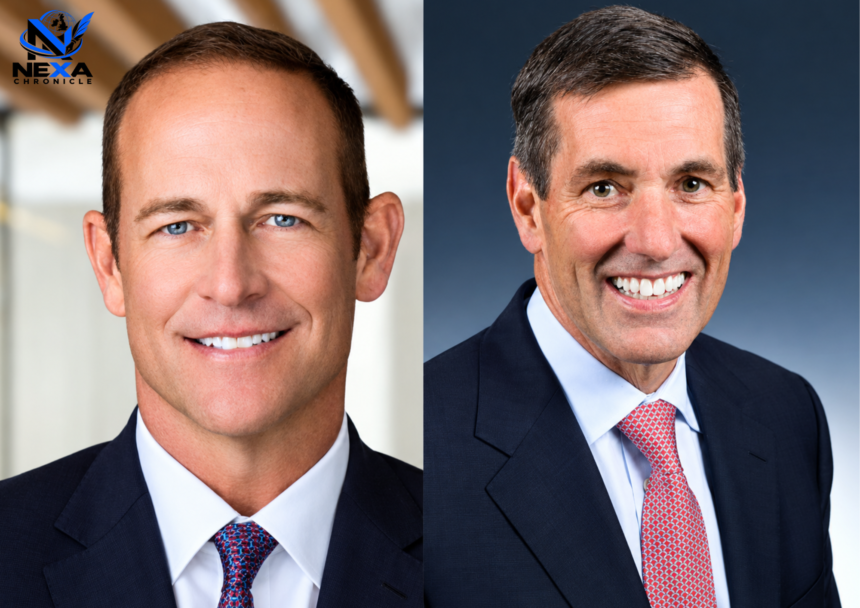
In the landscape of American business leadership, few pairings of names invite comparison quite like David Lawler and Bruce Broussard. These two executives have built distinguished careers at the highest levels of corporate America, yet they have operated in entirely different industries, followed distinct professional trajectories, and have no publicly documented personal or professional connection. As of late 2026, David Lawler serves as Chief Executive Officer of Caturus, an integrated natural gas and LNG company, while Bruce Broussard holds the position of Interim Chief Executive Officer of HP Inc. Their stories offer a compelling study in how leadership skills transfer across sectors, the value of operational depth versus financial and transformational expertise, and the evolving demands placed on modern CEOs.
This article examines their backgrounds, career milestones, leadership approaches, current roles, and the broader lessons their journeys provide for aspiring executives and observers of corporate America. By exploring these parallel yet independent paths, we gain insight into the diverse routes that can lead to the C-suite in energy, healthcare, and technology.
Early Foundations and Educational Backgrounds
David Lawler’s foundation is rooted in the technical world of energy. A Denver native, he earned a Bachelor of Science in Petroleum Engineering from the Colorado School of Mines and later completed an MBA at Tulane University. His early career reflected this engineering grounding. He began as a production engineer at Conoco and a drilling engineer at Burlington Resources before spending a decade at Shell E&P in leadership and technical roles focused on deepwater and Gulf Coast operations, including business planning support for the CEO of Shell Americas.
Bruce Broussard’s path started with a stronger emphasis on business and finance. He holds a Bachelor of Business Administration from Texas A&M University and an MBA from the University of Houston. He is also a Certified Public Accountant. These credentials positioned him for roles that combined financial acumen with operational leadership in healthcare services and insurance. His early professional steps included founding Harbor Dental in the late 1990s, where he served as CEO, demonstrating an entrepreneurial streak that would later inform larger-scale corporate transformations.
While Lawler’s education prepared him for the physical and technical complexities of extracting and managing energy resources, Broussard’s prepared him for the financial, regulatory, and service-delivery challenges of healthcare systems. Both men built careers that leveraged their foundational training while expanding into broader strategic leadership.
Career Trajectories in Distinct Industries
David Lawler’s professional journey has remained firmly within the energy sector. After his time at Shell, he took executive roles at PostRock Energy Corporation (serving as CEO and President) and SandRidge Energy (as Executive Vice President and Chief Operating Officer). In 2014, he became the head of bpx energy at BP, the corporation’s U.S. onshore unconventional and midstream business. Under his leadership, bpx grew significantly. A defining moment came in 2018 when he led the $10.5 billion acquisition of BHP’s onshore assets—the largest acquisition for BP in more than two decades. Output rose significantly as the group achieved enhancements in operations and decreased emissions.
Bruce Broussard’s career has centered on healthcare and later expanded into technology and broader corporate governance. After Harbor Dental, he joined US Oncology in 2000 as Chief Financial Officer, rising to President in 2006, CEO in 2008, and Chairman and CEO in 2009. Following McKesson’s acquisition of US Oncology, he served as President of McKesson’s Specialty Pharmacy Division. In December 2011, he became President of Humana Inc., adding the CEO title in 2013 (with some accounts noting full CEO responsibilities from 2014). He led Humana for more than a decade, guiding its expansion in Medicare Advantage, advancing value-based care models, and navigating the complex intersection of insurance, clinical outcomes, and cost management.
After stepping down from Humana, Broussard joined several boards, including HP Inc. (since 2021), Marsh & McLennan, Cleveland Clinic, One Call, and others. In early 2026, following the departure of HP’s previous CEO, the board appointed him Interim Chief Executive Officer. Drawing on his extensive public-company leadership experience, he has focused on advancing HP’s strategic agenda during the search for a permanent successor.
Read More About: Droven.io AI Startup: A Complete Guide to Its Technology, Features, Benefits, and Future
Leadership Styles and Core Expertise
Lawler’s leadership is characterized by deep operational and technical expertise combined with large-scale deal-making and strategic transformation within energy. He has consistently showcased his talent for forming exceptional teams, assimilating significant acquisitions, boosting production effectively, and harmonizing conventional hydrocarbon operations with enduring energy transition goals. His roles at BP required balancing resilient oil and gas operations with investments in convenience, mobility, and lower-carbon energy. At Caturus, this translates into scaling an integrated platform that aims to deliver responsibly sourced natural gas to domestic and international markets while pursuing growth targets measured in billions of cubic feet equivalent per day.
Broussard’s style emphasizes financial discipline, operational excellence, corporate transformation, and governance. Within US Oncology, McKesson Specialty, and Humana, he navigated intricate organizations during phases of expansion, mergers, and shifts in the industry. At Humana, he oversaw a major public company focused on improving quality of life through insurance and healthcare services, with particular strength in Medicare Advantage. His subsequent board roles and interim CEO position at HP highlight an ability to contribute strategic oversight across industries and to step into operational leadership when needed. His experience spans private and public companies, startups to Fortune 50 organizations, and sectors including oncology, pharmaceuticals, senior housing, home care, and technology.
Both leaders have shown comfort with scale, stakeholder management, and navigating regulatory and market complexity. Lawler’s strength lies in technical operations and energy-specific strategy; Broussard’s lies in financial leadership, healthcare system transformation, and multi-industry governance.
Current Roles and Industry Contexts
Bruce Broussard, as Interim CEO of HP Inc., brings continuity and experienced oversight during a leadership transition. The board has cited his operational, financial, and business leadership background, along with his familiarity with the company from his prior board service. Outside this role, he continues to contribute through other board positions and advisory work, including in healthcare technology and services. His career reflects a pattern of long-term stewardship of large organizations followed by selective involvement in governance and interim leadership.
Comparing Paths Without Forcing Connections
It is important to note that no widely available public information indicates that David Lawler and Bruce Broussard are related, have worked together, or have served as executives at the same company. They represent separate industries—energy versus healthcare and technology—and distinct professional ecosystems. Comparisons are therefore most useful as parallel case studies rather than as a narrative of collaboration or rivalry.
Both men illustrate the value of sustained excellence over decades. Lawler has spent more than 30 years primarily in energy, progressing from engineering roles to the highest levels of a global major and then to leading an ambitious independent platform. Broussard has spent a similar span in healthcare leadership, rising through finance and operations to CEO of a major insurer and later applying those skills in technology company governance. Each has managed large workforces, significant capital, complex stakeholders, and periods of industry transition.
Lessons for Aspiring Leaders and Corporate Observers
Several themes emerge from examining these two careers. First, domain expertise remains powerful. Lawler’s petroleum engineering foundation and deep operational experience in oil and gas enabled him to lead technical businesses and large acquisitions effectively. Broussard’s financial and healthcare services background equipped him to transform complex service organizations. Second, the ability to scale and transform organizations is transferable. Both moved from earlier executive roles into larger platforms, integrating acquisitions and setting long-term strategies. Third, governance experience and board service can extend a leader’s impact beyond a single CEO tenure, as seen in Broussard’s multiple board roles and Lawler’s involvement with educational and industry institutions.
In an era of energy transition, healthcare system evolution, and technological disruption, leaders who combine operational or financial depth with strategic adaptability appear well positioned. Lawler’s work at the intersection of traditional gas production and LNG exports addresses global energy demand and transition dynamics. Broussard’s experience navigating healthcare economics and now technology company leadership speaks to the growing convergence of industries around data, outcomes, and efficiency.
Broader Implications for American Business Leadership
The careers of David Lawler and Bruce Broussard reflect broader patterns in American executive leadership. The energy sector continues to require leaders who understand both the physical realities of resource development and the strategic imperatives of markets, policy, and sustainability. Healthcare and technology demand leaders who can manage regulation, cost, quality, and innovation simultaneously. Public company boards increasingly value executives who have successfully run large organizations through periods of change and who can provide steady interim leadership when needed.
Neither career path is presented here as superior; rather, both demonstrate that excellence can take multiple forms. Technical and operational mastery in a capital-intensive industry and financial and transformational leadership in service-oriented and technology businesses both create substantial value. For students of business, these profiles underscore the importance of building deep expertise while remaining open to evolving responsibilities and industry contexts.
Looking Ahead
As of 2026, both executives remain active at the forefront of their respective fields. Lawler continues to scale Caturus’s integrated platform amid strong interest in U.S. natural gas and LNG exports. Broussard is guiding HP through a transitional period while contributing to other organizations through board service. Their independent trajectories will likely continue to offer case studies in how experienced leaders navigate opportunity, responsibility, and change.
In summary, David Lawler and Bruce Broussard exemplify two successful models of modern executive leadership. One has built a career deep within energy, from engineering roots to integrated gas and LNG strategy. The other has shaped healthcare organizations and later applied that experience to technology company leadership and governance. Together, without any direct connection, they illustrate the diversity of paths that can lead to significant influence in American business.
Frequently Asked Questions
1. Who is David Lawler?
David Lawler is the Chief Executive Officer of Caturus, an integrated natural gas and LNG company. He previously served as Chairman and President of BP America and CEO of bpx energy.
2. Who is Bruce Broussard?
Bruce Broussard is the Interim Chief Executive Officer of HP Inc. He previously served as President and CEO of Humana for more than a decade and held senior roles at US Oncology and McKesson Specialty.
3. Are David Lawler and Bruce Broussard related or connected professionally?
No publicly verified information indicates that they are related, have worked together, or have served as executives at the same company. They have built careers in different industries.
4. What is Caturus and what is David Lawler’s role there?
Caturus is a privately held integrated natural gas and LNG platform with upstream operations and an LNG export project. David Lawler serves as its Chief Executive Officer.
5. What was Bruce Broussard’s role at Humanaz
He served as President starting in 2011 and as CEO for more than ten years, leading the company’s growth in Medicare Advantage and value-based care.
Conclusion
David Lawler and Bruce Broussard stand as independent examples of high-level executive achievement in contemporary American business. One has navigated the technical, operational, and strategic challenges of the energy industry, culminating in leadership of an integrated gas and LNG platform. The other has shaped major healthcare organizations and transitioned into technology company stewardship. Their stories, free of any direct professional overlap, highlight that successful leadership can emerge from varied educational and industry foundations. By studying these parallel careers, readers gain a clearer view of the skills, decisions, and adaptability required to lead large organizations through periods of growth and change. In a business environment that continues to demand both specialized expertise and broad strategic vision, the paths of Lawler and Broussard remain instructive for current and future leaders alike.